More Installations
MATERIALS LIST (DIRECTOR’S CUT)
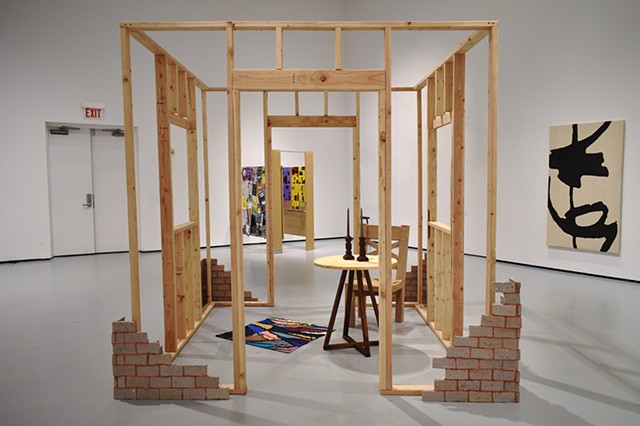
The exterior consists of wooden studs in a simple square, with the construction as consistent as possible with Connecticut building codes. There are two doors and two windows, so the front and back of the structure are left ambiguous. Freestanding brick structures protect each corner of the frame. These hand-made paper bricks were inspired by my 16-unit apartment building, which has the peculiar combination of not recycling but receiving a weekly automated delivery of the New Haven Register. For a few months, I collected the unwanted newspapers, turned them into paper pulp, and hand-pressed each brick with a mold I fabricated out of sheet steel. Ninety-six newspapers, water, and pressure turned into 233 bricks.
The structure’s interior contains a table, a chair, and a rug. The table is constructed from found wood, including discarded pieces from Pine & Iron Axe Throwing, a former New Haven business. Atop the table are two long candles in candlestick holders. The candles are cast iron, from old Connecticut radiators, and the candle holders are repurposed and reshaped piano legs, from a piano I rescued from disposal. Next to the table is a chair constructed entirely from cardboard collected from Yale dumpsters that, during the installation, visitors were able to sit in. The rug is woven from clothing recovered from the Office of LGBTQ+ Affairs on campus. The staff there maintains a Qloset, a free resource in which trans and queer individuals can find and experiment with gender-affirming clothing. I helped a staff member clean out the closet, and in exchange, I took home the reject clothing. My friends and I cut it into long strips, and then I wove these pieces on a frame loom into a complete rug depicting crossing tree branches.
Most of these materials had a purpose before I encountered them, and in the same manner, I gave them a purpose after the installation. The 2x4s returned mostly unchanged to the sculpture shop for future students to use. The bricks were made out of paper primarily for their alternative purpose of fuel for fire, so they will contribute to future campfires and cookouts in the sculpture building. I will keep the table, candles, and rugs for my future apartment, or perhaps gift them to a friend in the future, as they are functional and/or decorative pieces. The chair I will give to a friend who is a preschool teacher, and his students are excited to be able to scribble all over it. In this way, my work stays out of landfills and instead recirculates through the Yale and New Haven communities.